3 - The Burning Process
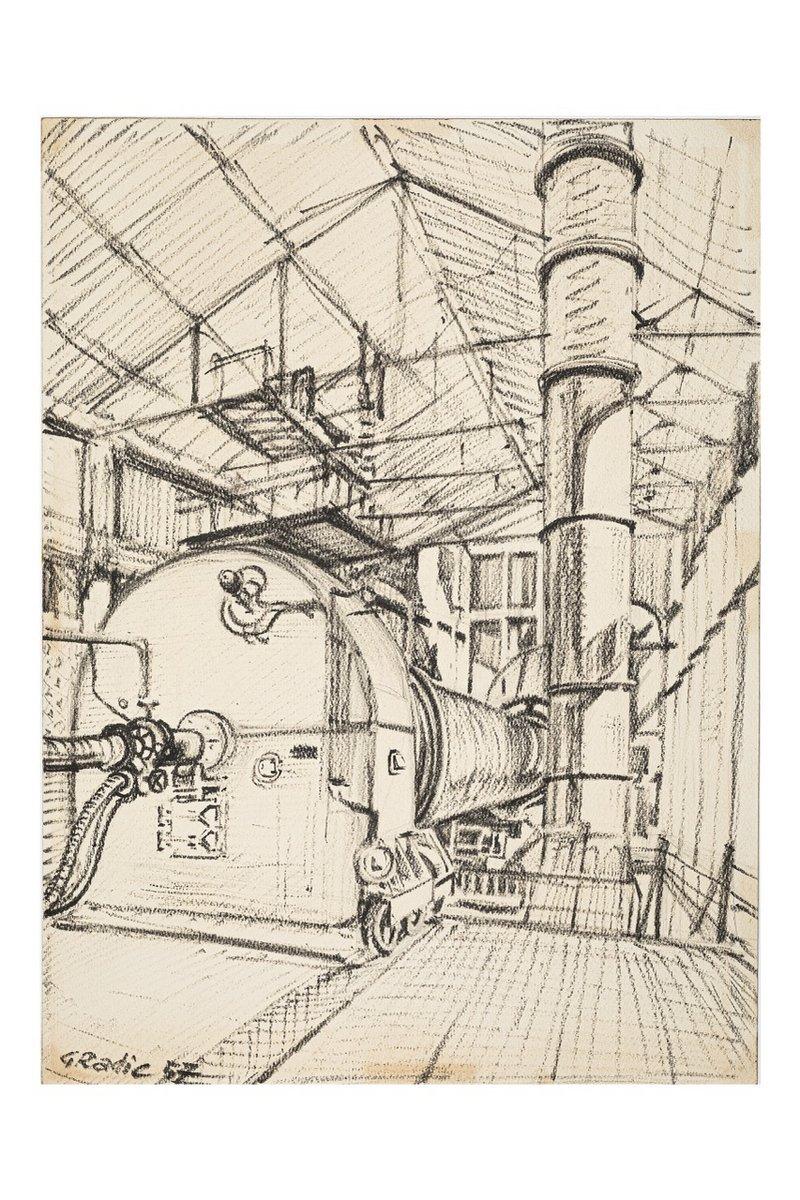
The "raw meal" is fired at extremely high temperatures to undergo chemical and physical transformation into clinker. Clinker is the intermediate product discharged from the kiln; to be converted into cement, it must achieve a specific chemical composition, containing varying percentages of calcium oxide ($CaO$), silicon dioxide ($SiO_2$), aluminum oxide ($Al_2O_3$), and iron oxide ($Fe_2O_3$). The burning system consists of three main components operating in sequence: the preheater tower (cyclone tower), the rotary kiln, and the clinker cooler.
THE PREHEATER TOWER (CYCLONE TOWER)
In the preheater tower (also known as the preheating or precalcining tower), the raw meal is dried and undergoes the first stage of the burning sequence: decarbonation. This process is essential for separating the CO_2 (carbon dioxide) contained in the raw materials as carbonates from the oxides required for clinker production:
Inside the cyclones, which are arranged in multi-stage tiers from top to bottom, the material is forced into a helical path in counter-current to the hot gases. This progressively increases the temperature of the raw meal from 100C (212F) to approximately 900C (1652F). Each individual cyclone (stage) is connected to the riser duct of the hot gases coming from the rotary kiln. The raw meal is fed from the top and, after descending through the four stages, enters the kiln via the meal pipe of the lowest stage.
THE ROTARY KILN
The rotary kiln is a steel cylinder with an internal refractory lining, positioned horizontally at a slight slope. The raw meal enters the kiln at the upper end (inlet), while the burner and its flame are located at the lower end (outlet/discharge zone). During the burning process, the kiln rotates slowly on its axis; due to the inclination, the meal advances through the kiln, sliding and rolling along the internal walls.
Progressively, the various phases of the burning process occur: the expulsion of remaining chemically bound water, the dissociation of magnesium carbonate, and the dissociation of calcium carbonate. When the material reaches a temperature of 1300C (2372F), the lime combines with clay minerals and the meal begins to agglomerate, forming nodules due to the sintering (partial fusion) of its constituents. The peak temperature reached at the end of the burning process is approximately 1450C (2642F) which allows for the formation and Sintering of the clinker grains.
THE CLINKER COOLER
The clinker exiting the kiln must be cooled rapidly to stabilise its mineralogical structure and chemical composition.
The cooler consists of a grate made up of a series of overlapping perforated plates that move with a reciprocating motion to transport the clinker discharged from the kiln. As it passes over these perforated plates, the clinker bed is cross-flowed by cooling air supplied by a series of fans located beneath the grate itself.
File audio
Continue browsing
ENG ENG 
ENG ENG